birth control data – sub-saharan africa
Context: The Access Collaborative – a consortium of partners co-led by PATH and JSI – tracks the supply, distribution, and uptake of DMPA-SC (Sayana Press), Pfizer’s self-injectable birth control, across more than 20 countries. Rollout had been mostly successful, and they were tracking it through a dashboard that collected data from all 20 countries. The problem was: nobody was using the dashboard. Usability issues and mismatched workflows meant the tool sat largely untouched, and the data was never loaded into it, rendering it ineffective. Our job was to redesign the tool so that country teams would actually want to use it and also find it useful in their own work.
Year: 2021
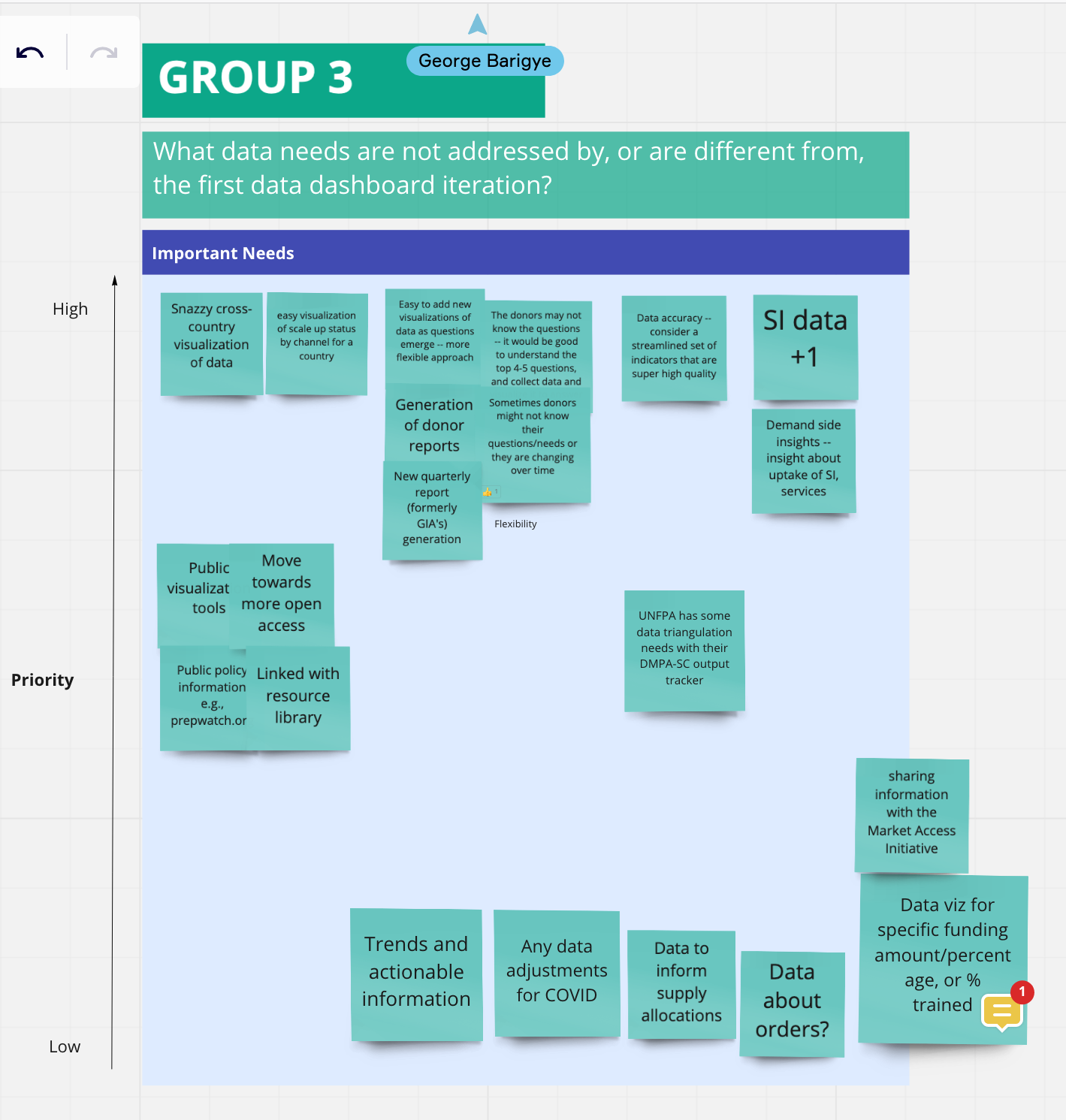
What I Did: Along with my teammate Gina Assaf, I served as creative director on this project, which was conducted entirely remotely due to the COVID-19 pandemic. We started with workshops with the PATH and JSI teams, including country-level staff, to map their data goals, needs, and existing workflows. Then we went deep: interviews across five priority countries, speaking with 40 people across 21 organizations, covering everyone involved in the data chain at each level. We made sure to spend time understanding what data is useful to which teams, and the different ways that people behave with it. We synthesized those needs, both global and country-specific, and workshopped with the Access Collaborative to redesign not just the dashboard, but the underlying data collection and reporting workflow that feeds it.
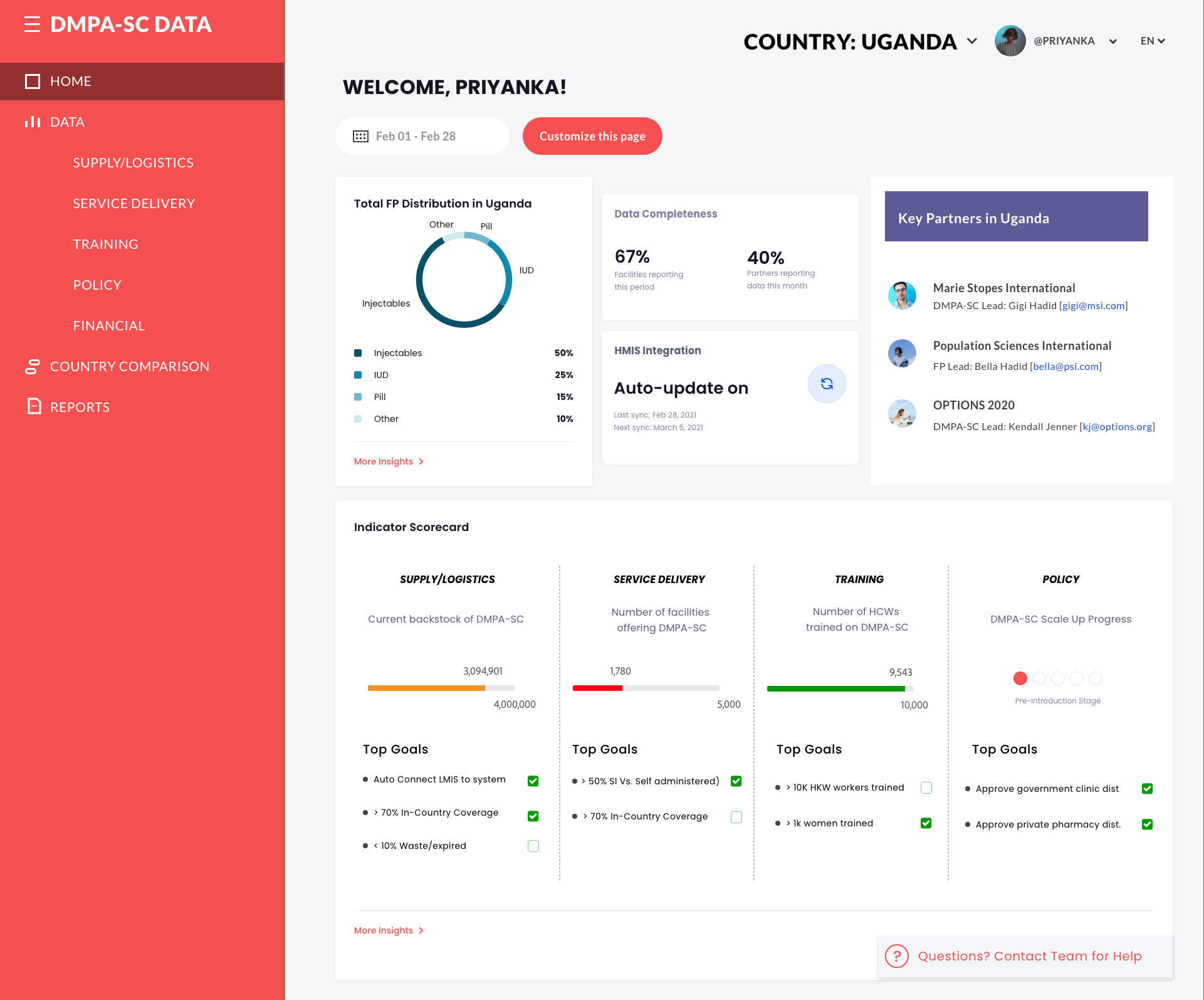
What We Made: We delivered a behavioral breakdown of roles and data workflows for DMPA-SC, translated into a full dashboard mockup with clear data categories and interaction design. The final deliverable was a detailed product vision guide for PATH and JSI, including mocked-up screens. The Access Collaborative built their new dashboard directly from our designs, rolled it out globally, and country teams are still using it today.