health worker comms – liberia
Context: The 2014 Ebola epidemic devastated the countries it touched, and in doing so, laid bare just how fragile health infrastructure can be when communication breaks down. One of the 2015 USAID Grand Challenge winners, funded specifically to help prevent future epidemics, was mHero: a two-way communication platform for health workers, developed by IntraHealth and UNICEF. The platform worked…the problem was usability. The team behind mHero was struggling to make it truly useful and workable for the people who actually needed to use it. Our team was brought in to develop a design strategy for mHero’s deployment in post-Ebola Liberia.
Year: 2016
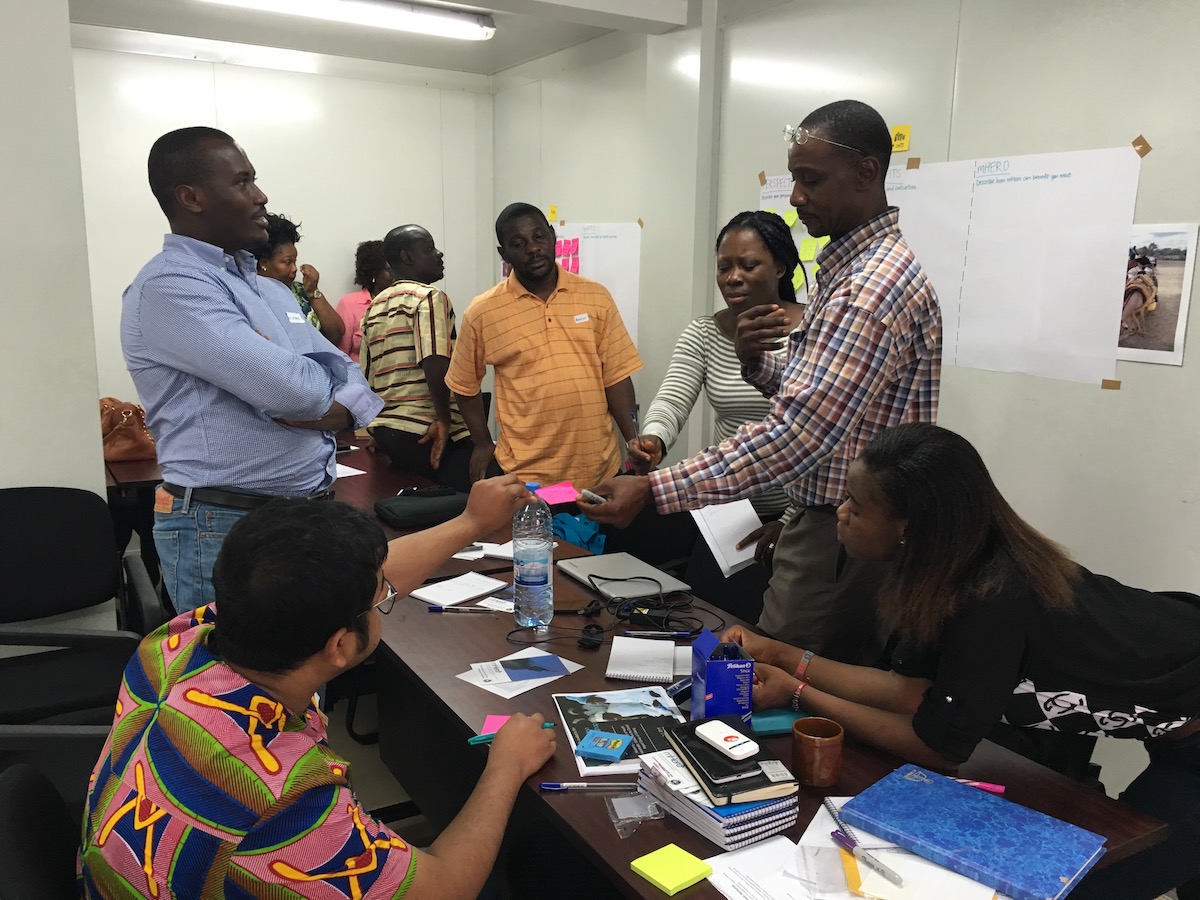
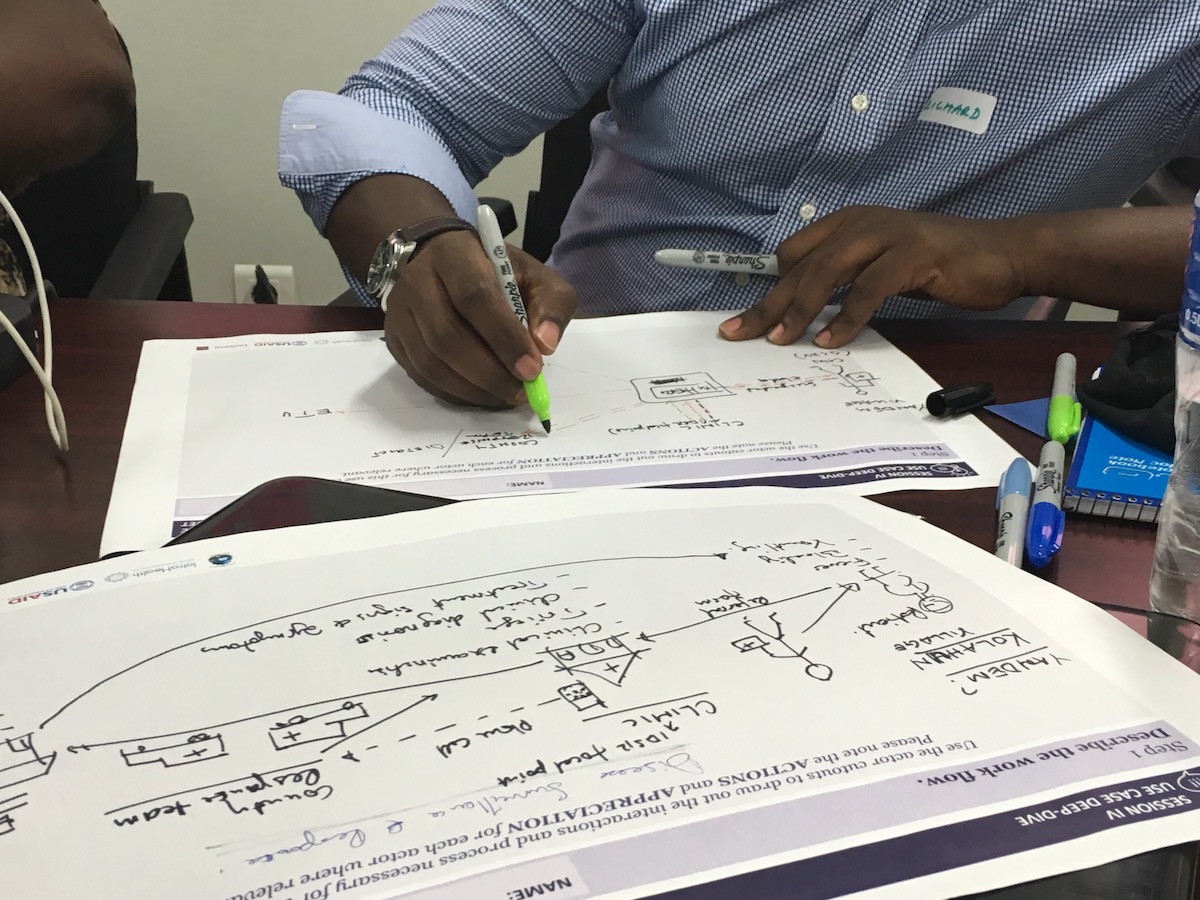
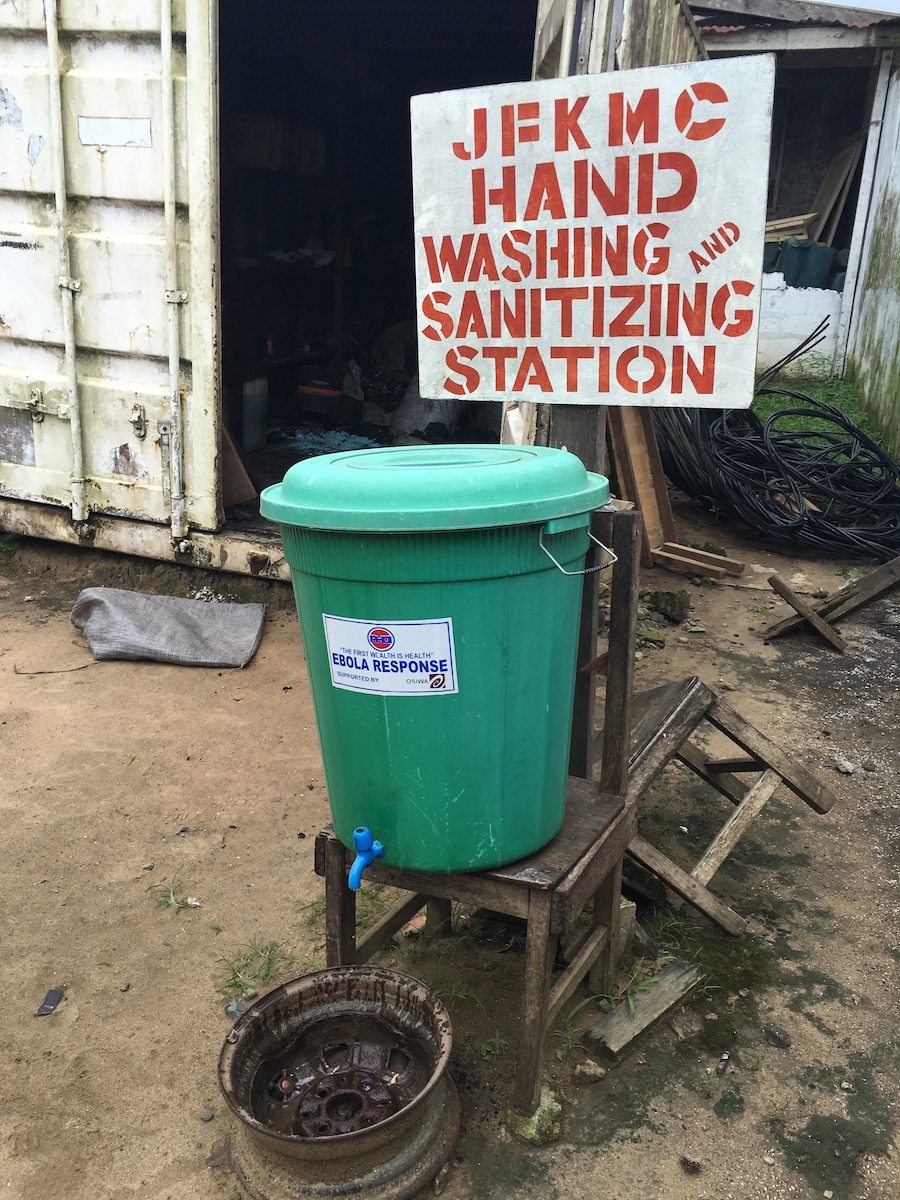
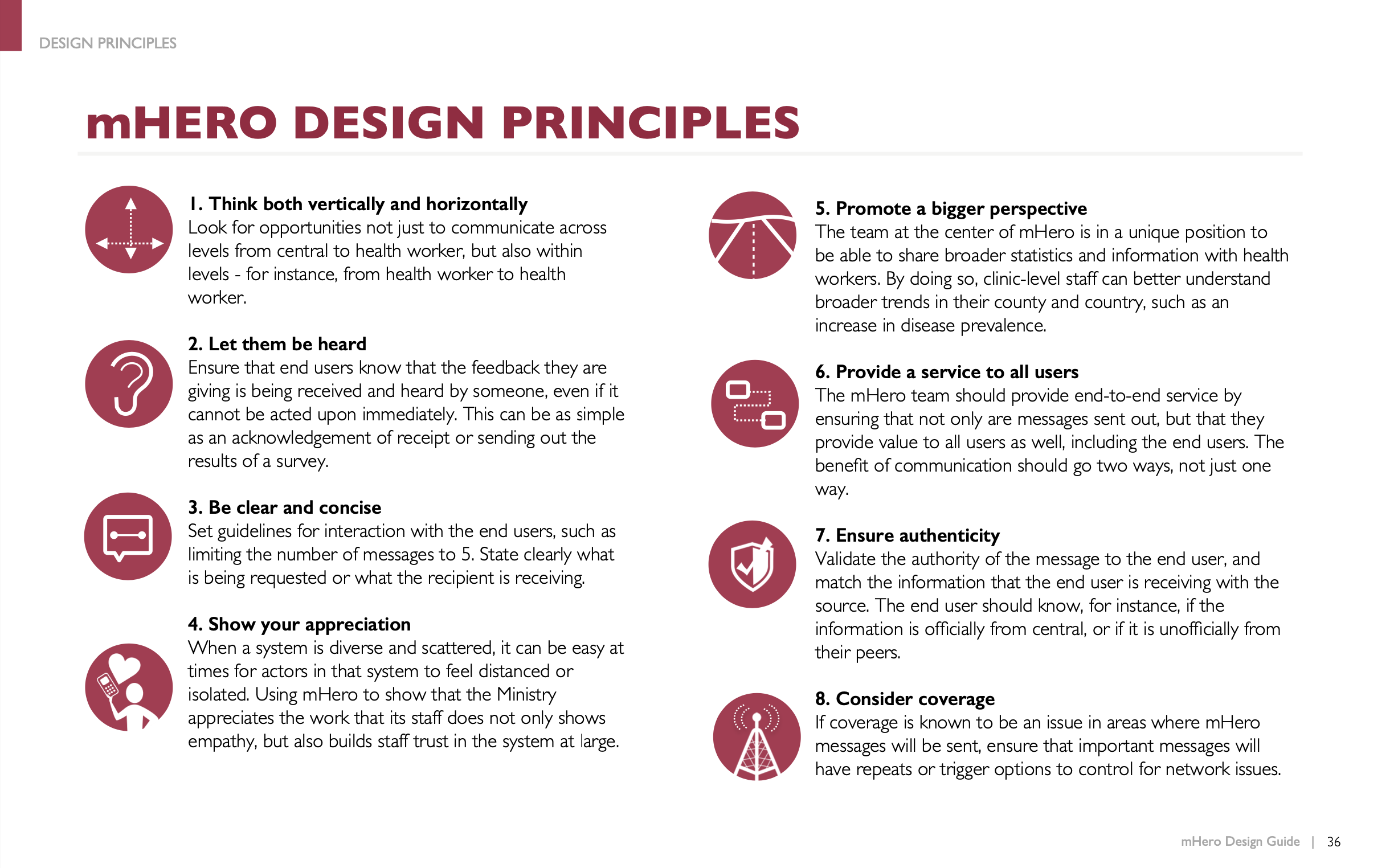
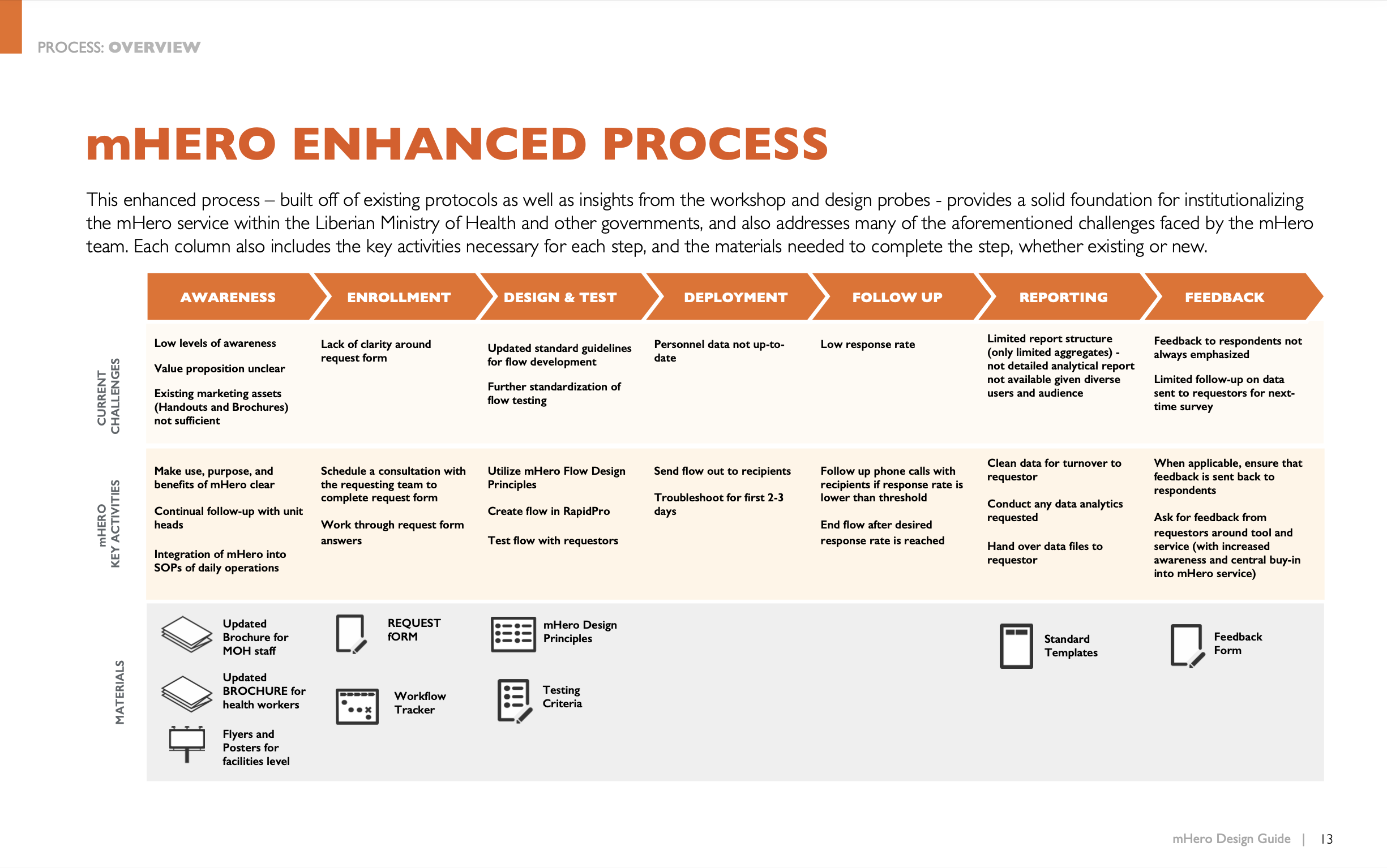
What I Did: I co-led this project through Dalberg Design. We started with deep background research, interviewing the creators of mHero and its early users, before traveling to Monrovia to host a visioning workshop with the Ministry of Health and spend time shadowing MoH staff and rural clinic teams. Being on the ground made clear what remote research couldn’t: mHero would need meaningful adaptation to fit Liberia’s specific context, and any rollout would require particular kinds of training to take hold. We synthesized everything into a set of use cases and design principles for mHero implementors.
What We Made: A comprehensive mHero Design Guide, submitted to USAID, which became the foundation for mHero’s now-extensive repository of implementation documentation and is still available on their website today.